|
|

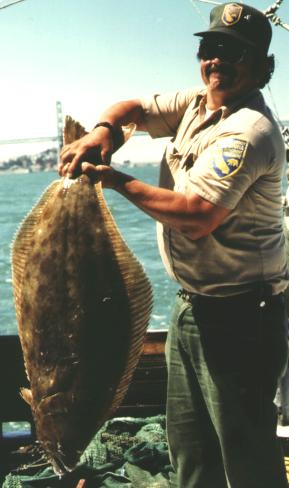
DFG News ReleaseSuccessful San Francisco Bay Halibut Catch Triggers DFG Survey to Ensure Sustainable FisheryContact: Paul Reilly, DFG Senior Marine Biologist, (831) 649-2879 June 30, 2008. The Department of Fish and Game (DFG) will monitor the San Francisco Bay halibut fishery to ensure that current regulations are protecting the species from overfishing. Recreational anglers and commercial hook-and-line fishermen are harvesting a higher than normal number of halibut from the bay for this time of year. “This successful harvest is likely due to a strong class of halibut that were born in 2004 and such reproduction is historically infrequent,” said DFG Director Donald Koch. “Although there is no indication that the halibut fishery is not sustainable, additional scientific data will allow us to better assess how the species should be managed, particularly in booming population years.”
A minimum legal size is a commonly-used management tool intended to allow the fish to reach reproductive size before being subjected to fishing pressure. Recreational and commercial halibut fisheries require fish to be at least 22 inches in total length. The length and weight of the fish are routinely collected for the fisheries; when possible, otoliths (ear bones) are taken for age determination. To evaluate the impact of various gear types on the survival of released halibut, DFG will also conduct a hooking mortality study within San Francisco Bay this summer. The study will help demonstrate the effectiveness of the size limit regulation. The California halibut fishery is known to exhibit geographic fluctuations and anglers should be aware that the fish tend to migrate inshore in the spring and summer to forage and spawn. After spawning, the adults generally move offshore in the fall and winter. During El Niño events, halibut larvae may be transported into northern California and after these fish grow to the minimum legal size of 22-inches in length they provide significant fishing opportunities in some years. In addition, juveniles and adults may move northward during these events. In addition to monitoring halibut in San Francisco Bay, DFG is also observing halibut fisheries at various locations within California and a formal stock assessment is expected to begin later this year. The assessment will be the first statewide evaluation of the halibut resource and is designed to provide an accurate estimate of the population size, as well as the amount of fishing pressure that the fishery can safely sustain. The recreational halibut fishery is monitored through the California Recreational Fisheries Survey. Commercial and charter boat halibut catch is monitored by DFG though landing receipts and logbooks. The primary distribution of California’s halibut stock is from central California to northern Baja California. All fishery regulation changes are under the jurisdiction of the Fish and Game Commission. Legislation would be required to change the commercial minimum size limit for halibut.
|